


This is a guest blog written for 1066 Country by Norman Miller.
Sussex author Norman Miller offers an insight into a dozen of the diverse 1066 Country places highlighted in his new book '111 Places in Hastings & Rye That You Shouldn't Miss'.
1. Old Roar Gill (Hastings)
Created to provide a slice of a Victorian wildness alongside Alexandra Park in the 1860s, this is a 'Lost World' idyll in the heart of Hastings. Head into a narrow richly wooded valley cut through with a stream and little waterfalls, flanked by ferns and orchids, overflown by kingfishers.
.png)
2. Bottle Alley (Hastings)
Opened in 1934 as part of a plan by visionary civil engineer Sidney Little to turn Hastings into a beacon of futurist architecture, the walls of this long beachside walkway are studded with recycled glass that sparkle in daily light shows each evening. The Alley also stages arts events - and hosts the Selkie Seafood Bar, one of Hastings' most characterful places to eat.
.png)
3. Battle Tapestry (Battle)
This intriguing 21st century complement to the world-famous Bayeux Tapestry (heading across the Channel to the British Museum in September) is tucked away inside Battle's 12th-century St Mary's church. Sussex embroiderer Tina Green led a team of over 700 local stitchers to create evocative panels depicting daily Sussex life in the decades after the Norman invasion.
.png)
4. Durbar Hall plus 'Grey Owl' (Hastings)
Tucked away inside Hastings Museum, Durbar Hall is a glorious recreation of an 1880s Indian palace that provides a wood-carved backdrop for an incredible collection of ethnographic objects acquired by a 19th century lady aristocrat in 19th-century Oceania and Asia. Alongside, a gallery combines evocative First Nation items from North America with the story of the Hastings-born man who morphed into a Canadian tribal figure - then eco-pioneer who inspired David Attenborough.
.png)
5. Old Pier Penny Arcade (Rye)
Roll up, roll up for this evocative clutch of characterful coin-operated retro British amusement arcade automata from the 1920s-50s. Pop in a big old one-penny coin (from the change machine) to watch Barnacle Bill's laughing fit, the 'racy' swimsuited ladies of What the Butler Saw, or family conflict played out in Reading The Will!
.png)
6. St Thomas the Martyr Church (Winchelsea)
Come and see Britain's wittiest gravestone in the churchyard of this majestic Winchelsea church – for comedian Spike Milligan, with the Gaelic inscription ‘Dúirt mé leat go mé breoite’ ('I told you I was sick'). But make time too for the ravishing modernist stained glass by Douglas Strachan inside – most poignantly, the 1928 window commemorating the Mary Stanford lifeboat disaster remembered by several local memorials to this day.
.png)
7. Mad Jack's Follies (Brightling)
These bizarre follies around the hamlet of Brightling were built for John ‘Mad Jack’ Fuller, a Georgian squire – their creation often spurred by boozy bets! Tick them off across the rolling slopes of Brightling Park provides, while enjoying some of rural Sussex's finest views.
.png)
8. 1066 Country Sculpture Trail
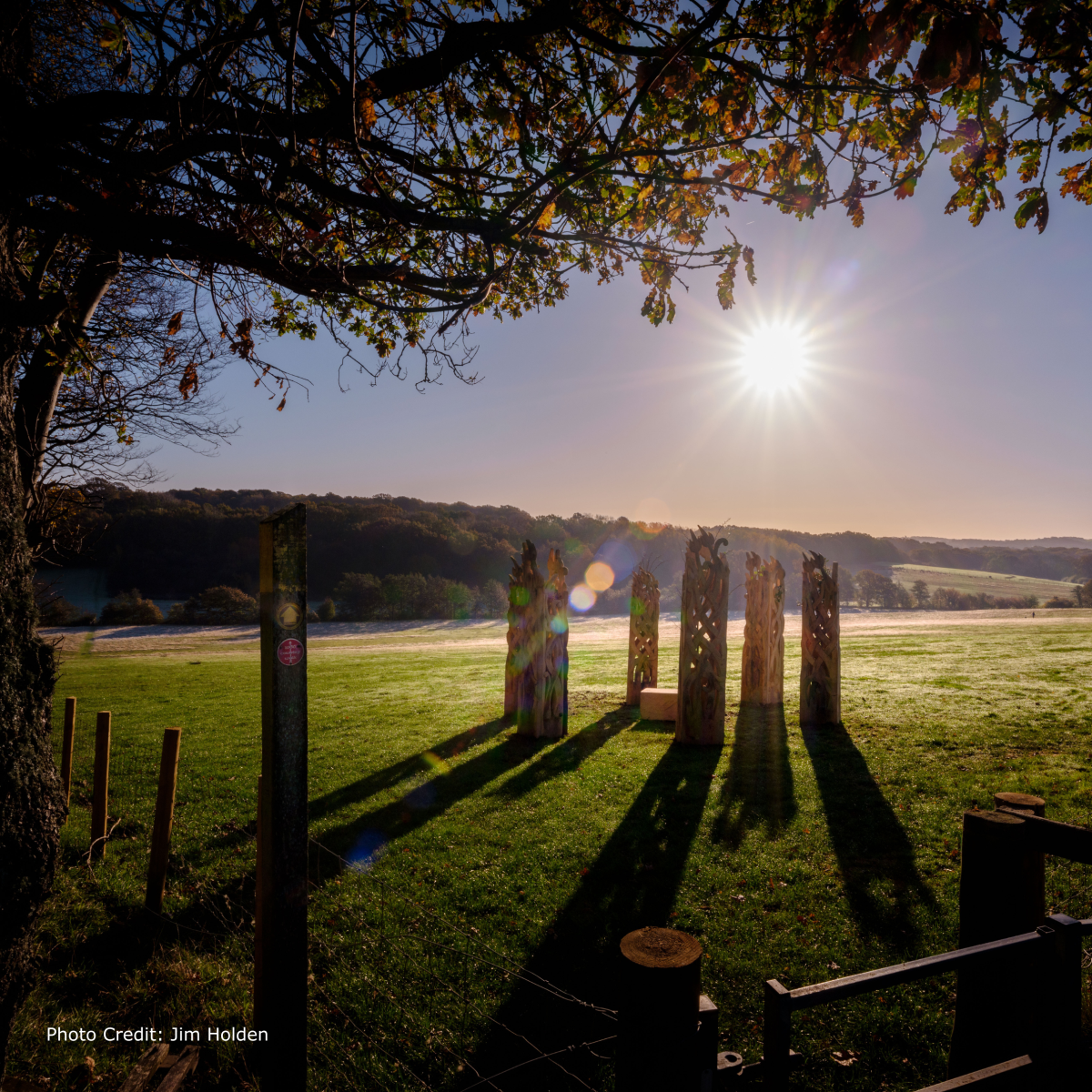
Norman's book picks out Isti Mirant Stella (depicting Halley's Comet by Herstmonceux Observatory Centre), as just one of 10 wondrous wooden sculptures by Sussex sculptor Keith Pettit along the 31 miles of the 1066 Country Trail between Pevensey and Rye. Each is inspired by events from that transformative year, with perhaps the most eye-catching being Bound Division in woods near Battle Abbey, and the wooden monoliths of Farbanks Henge at Pattletons Farm near Westfield.
9. Volta & The Easter Egg (Bexhill)
Discover Bexhill's unsuspected racy side as a beacon of British motor racing in a dedicated gallery at Bexhill Museum containing both a wackily-shaped icon of vintage four-wheeled speeding plus a remarkable world record-breaking electric car – built by local school kids!
.png)
10. The Bell (Ticehurst)
The medieval village of Ticehurst is home to this uniquely styled ancient inn, voted Best Pub in the county by Sussex Life magazine and Britain's Best Pub Hotel by The Sunday Times. Those accolades spring in part from eye-popping décor in every room, plus a restaurant bar featuring original art works by Francis Bacon and Picasso.
.png)
11. Brede Steam Giants (Brede)
Down a country lane just north of Hastings is a unique collection of hissing and clanking pumping machines that are a testament to awesome Victorian and Edwardian engineering, standing up to 10m tall inside original engine houses. Don't miss the chilling 1950s add-on in the shape of an adjacent Cold War era nuclear bunker that would have maintained local water supplies in an atomic war.
.png)
12. The Truggery (Herstmonceux)
The village of Herstmonceux is the heart of a Sussex basket-making tradition renowned worldwide. Named from the Anglo-Saxon word trog for ‘boat shaped vessel’, trugs have been made here from local willow and sweet chestnut since the 13th century. Snap up beautiful contemporary examples at this characterful workshop outlet, and watch local makers keeping an ancient craft alive.
.png)
Pick-up your copy of '111 Places in Hastings & Rye That You Shouldn't Miss' from booksellers including Waterstones and Amazon now!
Related

Battle's Grade I Listed church of national historic importance, with a thriving community.
Visit Hastings’ family-friendly and diverse Museum and Art Gallery for an exploration of art, heritage and history from around the world.
If you're looking for things to do in Rye, don't miss the Rye Heritage Centre. Here you'll find the 'Story of Rye', a town model with dramatic light and sound effects that brings the history of Rye to life.
Once one of England’s most thriving ports, now landlocked, this tranquil hilltop town sits upon a honeycomb of hidden cellars.
You might spot several follies as you walk through the Brightling countryside.
The 31-mile 1066 Country Walk is a relatively easy, low-level route through countryside that witnessed the Norman Conquest. Starting at Pevensey Castle (though you can start in Rye), it passes Herstmonceux Castle, the historic 1066 Battle Abbey and Battlefield, medieval Winchelsea, ending in historic Rye.
It’s curious, it’s quirky, it’s packed to the rafters with diverse objects with a surprise in every cabinet and around every corner.
A village with many claims to fame — moated castle, former Royal Observatory, science centre and home of the Sussex trug.




Comments
Comments are disabled for this post.